
Grow Your Real Estate Team with Dedicated Virtual Assistants


A virtual assistant for real estate teams is a remote professional who handles administrative, marketing, and operational tasks for agents, brokerages, and investors. Unlike a freelancer or gig worker, a real estate VA works full-time and integrates directly into your daily workflows, your CRM, your calendar, your transaction pipeline. They are not a temporary fix. They are a dedicated team member who happens to work remotely.
At ClearDesk, we have placed remote team members with real estate professionals across the country. We process over 55,000 applications per quarter and accept fewer than 0.5% of candidates. The people we place are skilled, vetted, and ready to contribute from day one. This post covers everything you need to know about hiring a virtual assistant for your real estate team, from what they can do to what they cost to how to set them up for success.
What Is a Virtual Assistant for Real Estate Teams?
A real estate virtual assistant is a remote professional who supports agents, brokers, and investors with tasks that consume time but do not require a license. They work during your business hours, use your tools, and follow your processes. They attend team meetings, update your CRM, manage your inbox, and keep transactions moving.
The key difference between a real estate VA and a freelancer is commitment. Freelancers take on jobs. VAs join your team. When you hire a dedicated real estate virtual assistant, you get someone who learns your systems, knows your clients, and improves over time. That consistency is what makes them valuable.
What a Real Estate Virtual Assistant Can Do
Real estate VAs handle a wide range of tasks across admin, lead generation, transaction coordination, marketing, and client communication. Here is a breakdown by function.
Administrative and CRM Support
Data entry and CRM management: Updating contact records, logging calls and emails, keeping your database clean and current
Calendar and appointment scheduling: Coordinating showings, agent meetings, and client calls
Document preparation: Drafting listing agreements, contracts, and client packets
Email and inbox management: Filtering messages, flagging urgent items, and responding to routine inquiries
Lead Generation and Follow-Up
Prospecting and cold outreach: Calling expired listings, FSBOs, and running circle prospecting campaigns
Lead qualification: Screening inbound leads to identify serious buyers and sellers
Database nurturing: Following up with past clients and warm leads on a set schedule
Appointment setting: Booking consultations directly onto agent calendars
Transaction Coordination
Contract-to-close management: Tracking deadlines, contingencies, and milestones on every active deal
Document collection: Gathering signatures, disclosures, and inspection reports
Vendor and lender communication: Coordinating with title companies, inspectors, and mortgage brokers
Compliance checks: Making sure all paperwork meets brokerage and legal requirements
Marketing and Social Media Management
Listing marketing: Writing property descriptions, creating flyers, and building email campaigns
Social media posting: Scheduling content, engaging with followers, and maintaining a consistent brand presence
Website updates: Adding new listings, updating agent bios, and posting blog content
Graphic design support: Creating branded materials using tools like Canva
Client Communication and Scheduling
Inbound call handling: Answering inquiries, routing calls, and taking messages (this is the virtual real estate receptionist function)
Showing coordination: Scheduling property tours and sending reminders to all parties
Client updates: Keeping buyers and sellers informed on where their transaction stands
Benefits of Hiring a Virtual Assistant for Your Real Estate Team
Most teams add remote support because they are growing faster than their current staff can handle. Here is what changes when you bring on a dedicated real estate VA.
Cost Savings Compared to Local Hires
Hiring a remote team member based in the Philippines or another offshore location costs far less than hiring locally. You skip the office space, the equipment, the benefits package, and the payroll taxes. Benefits alone cost employers an average of $14.01 per hour on top of wages. For the same budget, you often get a more experienced professional working full-time. That cost difference is real and it compounds quickly as your team grows.
Scalability as Your Team Grows
When your listing volume spikes or you take on more agents, you need more support fast. Traditional hiring takes months. Adding a vetted VA through a staffing partner can happen in days. Outsourcing for real estate gives you the capacity you need without a long-term commitment you are not ready to make.
Increased Agent Productivity

When agents spend their time on CRM updates, scheduling, and paperwork, they are not in front of clients. A dedicated VA takes those tasks off the agent's plate so they can focus on showings, negotiations, and closings. That is where the revenue is. The average agent spends less than 20% of their week on revenue-generating activities, and every hour spent on admin is an hour they are not closing deals.
Consistent Lead Nurturing and Follow-Up
Most agents have good intentions about following up. Most also fall behind, even though leads receiving six or more contact attempts convert at 70% higher rates. A dedicated VA follows up consistently, without exception, because that is their job. They send the check-in emails, make the follow-up calls, and keep your database warm. No lead falls through the cracks because someone was too busy to make a call.
Who Should Hire a Real Estate Virtual Assistant?
Different real estate professionals use VAs in different ways. Here is who benefits most.
Real Estate Teams and Brokerages
Growing teams and brokerages use VAs to support multiple agents with shared admin, marketing, and transaction coordination. With team-based agents reporting a median of 32 transaction sides per year, the operational load demands dedicated support. Instead of hiring a full-time coordinator for each agent, one well-placed VA can support several. Realtor virtual assistant services work especially well at this level because the tasks repeat across agents and can be standardized quickly.
Real Estate Investors
Investors use virtual assistants for deal sourcing, property research, tenant communication, and bookkeeping support. A virtual assistant for wholesaling real estate handles tasks like pulling lists, sending outreach, and managing follow-up on motivated seller leads. For investors running multiple deals at once, a VA keeps the pipeline moving without adding headcount.
Commercial Real Estate Professionals
Commercial real estate virtual assistants handle market research, lease administration, tenant prospecting, and document management. Commercial brokers and property managers deal with complex transactions and large volumes of paperwork. A VA trained in those workflows adds real capacity without the cost of a full-time hire.
How Much Does a Real Estate Virtual Assistant Cost?
Real estate virtual assistant pricing depends on three things: the hiring model, the experience level of the VA, and the scope of work. Here is how the main options compare.
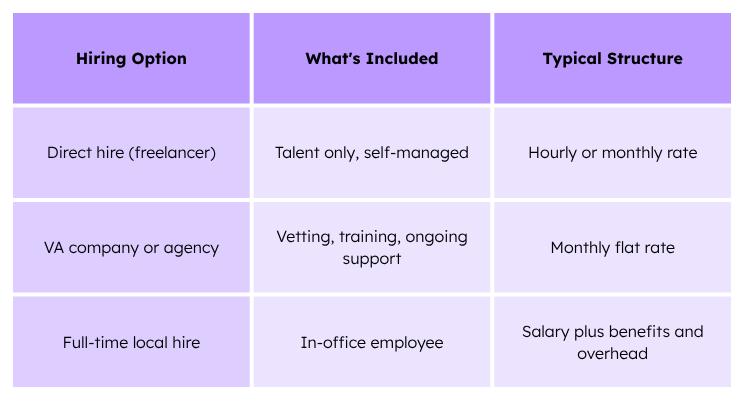
Working with a real estate virtual assistant agency like ClearDesk means the vetting, training, and ongoing support are built in. You are not sourcing candidates on your own or managing performance from scratch. ClearDesk placements start at $2,500 per month with no long-term contract required. Pricing varies based on role complexity and whether you need a generalist or a more specialized team member.
One honest limitation worth naming: ClearDesk does not offer part-time placements. Our model is built around full-time, dedicated team members. If you need someone for five hours a week, we are not the right fit. But if you need a full-time team member who is accountable, skilled, and integrated into your operations, that is exactly what we deliver.
How to Hire a Real Estate Virtual Assistant

The process looks different depending on whether you hire directly or work through a company. Here is a clear, step-by-step approach that works either way.
1. Identify Tasks You Want to Delegate
Start by listing the tasks that consume the most time or fall through the cracks most often. Think about what would create the biggest impact if handled consistently by someone else. Common starting points include CRM updates, lead follow-up, transaction tracking, and social media.
2. Define the Skills and Experience You Need
Decide what software your VA needs to know. Do they need experience with Follow Up Boss, BoomTown, or a specific MLS platform? Do they need strong phone skills for outbound calling? Do they need design skills for marketing materials? Understanding the real estate virtual assistant skills that matter most for your workflow helps you write a sharper job description and avoid mismatched hires.
3. Choose Between Direct Hire and a VA Company
Direct hiring costs less upfront but requires you to source, screen, and manage the process yourself. Working with a real estate virtual assistant company means the agency handles vetting, background checks, and ongoing support. If your first placement is not the right fit, a reputable agency replaces them. That safety net matters, especially for your first hire.
4. Evaluate Candidates and Conduct Interviews
Assess communication skills, reliability, and fit with your team culture. Ask scenario-based questions tied to real tasks. For example: "Walk me through how you would manage a transaction timeline from contract to close." The answer tells you a lot about their process and experience.
5. Onboard and Train Your New Team Member
Give your VA clear documentation of your processes, access to your tools, and a defined set of expectations from day one. Schedule daily check-ins for the first two weeks. The more structure you provide early, the faster they become fully independent.
Ready to find the right person for your team? Book a Discovery Call and we will walk you through exactly what a ClearDesk placement looks like for your business.
How to Set Up Your Virtual Assistant for Success
Hiring the right person is only half the work. How you onboard and manage them determines how much value they create.
Document your processes: Write SOPs for every recurring task before your VA starts. This lets them work independently without coming back to you for direction on every step.
Use shared tools: Set up shared tools like project management software, shared calendars, and cloud storage so your VA has full visibility into what is happening across the team.
Set a communication cadence: Daily or weekly check-ins keep things on track. Decide upfront which channel you use, whether that is Slack, email, or a quick video call.
Give feedback early: Address problems in the first two weeks, not the first two months. And when your VA does strong work, say so. Recognition builds loyalty and long-term performance.
We work with a lot of real estate team leaders who tell us the same thing after their first few weeks: "I wish I had done this sooner." The setup takes a little effort upfront, but the return on that effort is significant.
A Real-World Example: What This Looks Like in Practice
Tom Margolis at Interim HealthCare shared this about his ClearDesk experience: "We have an outstanding scheduler that has consistently outperformed most, if not all, the employees we had doing this job previously. ClearDesk handled this situation with extraordinary professionalism and care and had several excellent candidates vetted within days."
While Tom's team operates in home care rather than real estate, the result reflects what we see across industries: a dedicated, vetted remote team member who outperforms local hires at a fraction of the cost. Real estate teams experience the same outcome when the right person is matched to the right role.
For teams specifically exploring home care staffing support, our home care virtual assistant page covers how we work with agencies on scheduling, recruiting, and caregiver communication.

Build Your Real Estate Team with the Right Virtual Assistant Partner
Working with a staffing company that vets, trains, and supports remote team members is a different experience from hiring on your own. At ClearDesk, we have a 4.9 out of 5 client satisfaction rating and have been recognized in Forbes for remote staffing excellence. We do not place just anyone. We accept fewer than 0.5% of applicants, which means the person we place with you has already been through a rigorous process before they ever meet you.
The right real estate virtual assistant does not just complete tasks. They become part of how your team operates. They know your clients, your systems, and your standards. That is the kind of fit we build toward with every placement.
Book a discovery call to talk through your team's needs and see how a dedicated VA can support your growth.
Frequently Asked Questions
Q: What time zones do real estate virtual assistants typically work in?
A: Most real estate VAs placed through agencies like ClearDesk are based in the Philippines and work during U.S. business hours. This means they are available in real time for calls, scheduling, and client communication alongside your agents. You do not need to adjust your workflow to accommodate a different schedule.
Q: How do real estate teams keep a remote virtual assistant accountable?
A: The most effective teams use project management tools like Asana or Monday.com, set daily check-ins, and track output against clear goals. ClearDesk also provides ongoing support to help you monitor performance and address issues early. Accountability comes from structure, not proximity.
Q: What happens if the virtual assistant placed by an agency is not a good fit?
A: Reputable real estate virtual assistant companies offer replacement guarantees. At ClearDesk, if a placement does not work out, we work quickly to find a better-matched candidate. Tom Margolis noted that when he needed a replacement, ClearDesk "had several excellent candidates vetted within days." That response time matters when your operations depend on consistent support.
Q: What software tools does a real estate virtual assistant need to know?
A: The specific tools depend on your team's setup, but common ones include a CRM like Follow Up Boss or BoomTown, MLS platforms, Google Workspace or Microsoft 365, and a project management tool. VAs sourced through a specialized agency often come with experience in these tools already.
Q: Can a real estate virtual assistant handle confidential client information securely?A: Yes, when you work with a vetted staffing partner. ClearDesk VAs sign confidentiality agreements and follow data security protocols. For teams handling sensitive transaction data, this protection is built into the engagement from the start.
Q: Is a real estate virtual assistant the same as a transaction coordinator?
A: Not exactly. A transaction coordinator focuses specifically on managing deals from contract to close. A real estate VA can fill that role, but they can also handle admin, marketing, lead follow-up, and client communication. The scope is broader, which is why many teams use one VA to cover multiple functions rather than hiring separate specialists for each.


